Japanese Nikujaga 🍲

I just learned about nikujaga this year, and I can’t believe it took me this long.
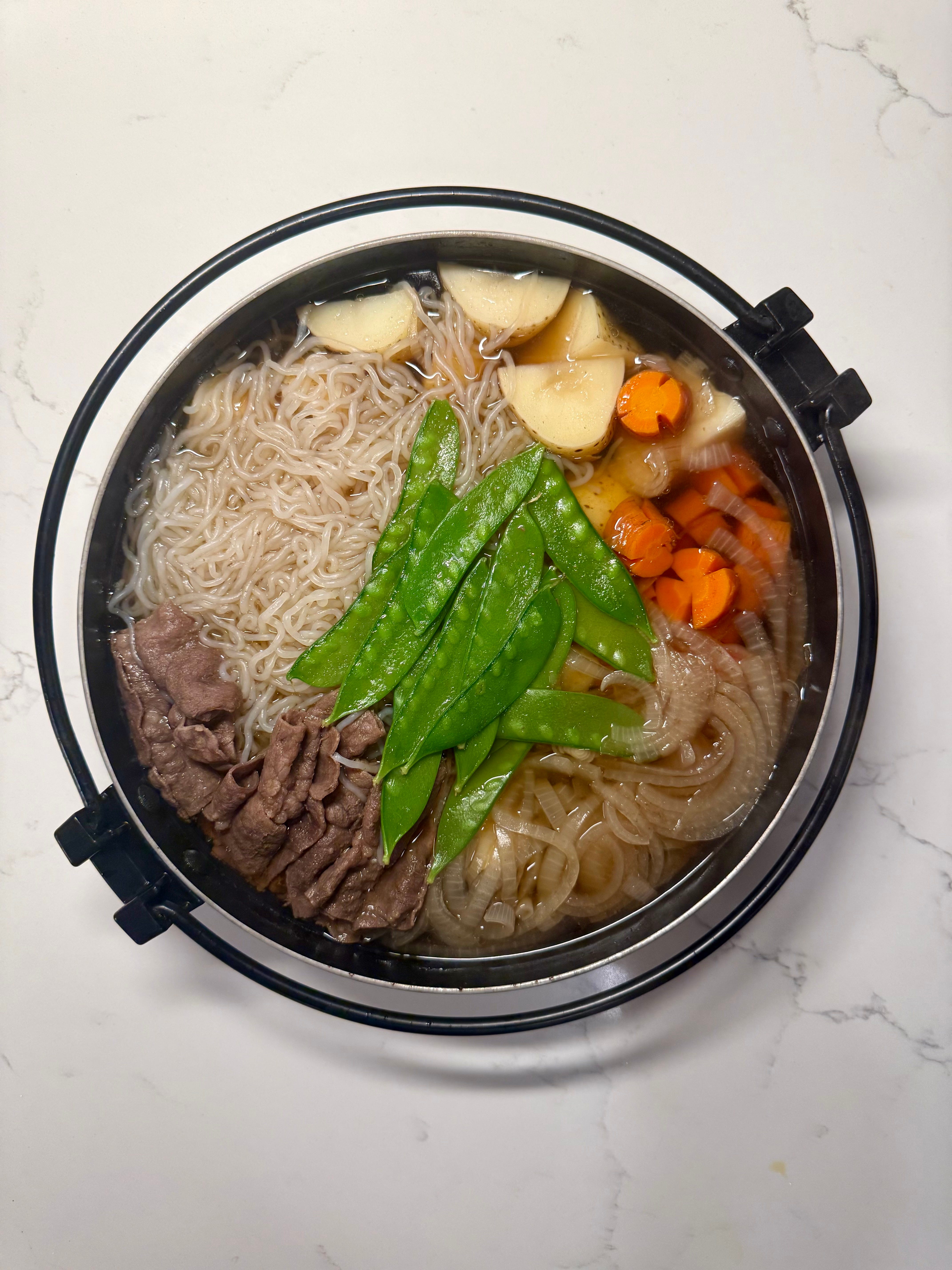
Nikujaga is a classic Japanese home-cooked dish made with thinly sliced meat, potatoes, onions, and carrots simmered in a lightly sweet, savory broth. The kind of food people grow up eating at home, not necessarily ordering at restaurants.
From what I’ve learned, nikujaga became popular in Japan in the early 1900s as a way to adapt Western-style stews using Japanese seasonings like soy sauce, sugar, and dashi. Over time, it became a staple “mom dish”: something that tastes nostalgic, cozy, and familiar.
When I first tried making it, I loved the flavor but realized the traditional method can take longer than I want on a weeknight. So naturally, I made a lazy version that still hits all the same notes, just without the extra steps. This is now firmly in my easy dinner rotation.
Below are both versions: the way I usually make it, and the more traditional method if you’re feeling a little more patient. I suggest using a high quality nabe pan or hot pot pan to make this, but you can also just use a regular pot.
Video tutorial HERE
My Lazy One-Pan Nikujaga (15–20 Minutes)
This is the version I make after work when I want something comforting but don’t want to think too hard. No sautéing, no extra bowls, just a true throw-everything-in situation. 😂
Ingredients (Serves 2–3)
Thinly sliced beef (about 300–350g)
3 medium Yukon Gold potatoes, peeled and cut into 1–1.5 inch chunks
½ large onion, thinly sliced
1 large carrot, thinly sliced and punched into flower shapes
1 pack shirataki noodles, rinsed and cut (added later)
Handful of snow peas (added later)
Simmer Sauce
1½ cups dashi (or water + dashi powder)
3½ tbsp soy sauce
2½ tbsp mirin
2 tbsp sake
1½–2 tbsp sugar (adjust to taste)
Lazy Method
Add beef, potatoes, onion, and carrot flowers directly into a cold nabe pan.
Pour in all the dashi, soy sauce, mirin, sake, and sugar. Gently separate the beef so it doesn’t clump.
Turn heat to medium-high and bring to a steady simmer. Once simmering, lower heat to medium, cover, and cook for 10–12 minutes until the potatoes are tender.
Add shirataki noodles and snow peas, cover again, and cook for 2–3 more minutes.
Uncover and let the sauce reduce slightly until glossy and clingy. Taste and adjust seasoning if needed.
Serve hot with rice, goma sauce for dipping, straight from the pan.
This version is lighter, faster, and still deeply comforting. The flower carrots make it feel cute with basically zero extra effort.
The More Traditional Nikujaga Method (Optional)
If you want something closer to the classic approach, this version builds flavor step by step.
Traditional Method Overview
Heat oil in a pan and lightly brown the beef.
Add onions and cook until softened.
Add potatoes and carrots, stirring to coat them in the oil.
Pour in dashi, sake, sugar, mirin, and soy sauce.
Simmer gently, partially covered, for 30–40 minutes until the potatoes are fully tender and the broth reduces.
Add shirataki halfway through and greens at the very end.
This method gives you slightly deeper caramelized notes and a more concentrated broth, but it does take more time and attention.